
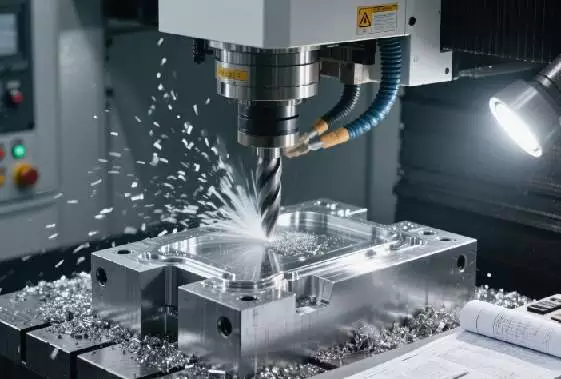
Introduction to Advanced Manufacturing Evolution
Modern manufacturing is undergoing a major transformation driven by automation, digital precision, and intelligent production systems. At the center of this shift is high-performance CNC technology, which enables industries to achieve exceptional accuracy, speed, and repeatability in part production. One of the key contributors in this space is JUCHENG CNC Machining, which plays a central role in shaping next-generation engineering solutions through advanced precision systems.
As global industries demand tighter tolerances, faster turnaround times, and more complex geometries, traditional machining methods are no longer sufficient. This is where JUCHENG CNC Machining becomes essential, bridging the gap between design innovation and real-world manufacturing execution.
The Core Strength of JUCHENG CNC Machining
JUCHENG CNC Machining is built around the principles of computer-controlled precision, automation efficiency, and industrial scalability. CNC (Computer Numerical Control) systems allow manufacturers to program highly detailed instructions into machines, ensuring every cut, drill, and contour is executed with exact accuracy.
What makes JUCHENG CNC Machining particularly powerful is its integration of advanced control systems with high-speed machining capabilities. This combination allows manufacturers to produce complex components with minimal deviation, reducing waste and improving overall production efficiency.
In industries such as aerospace, automotive, electronics, and medical equipment, this level of precision is not optional—it is essential. JUCHENG CNC Machining enables these sectors to meet strict quality requirements while maintaining consistent production output.
Driving Innovation in JUCHENG Precision Machining Technologies
The evolution of JUCHENG Precision Machining Technologies is closely tied to the advancements in CNC systems. By integrating automation, smart tooling, and real-time monitoring, JUCHENG CNC Machining enhances the capabilities of precision manufacturing to a new level.
One of the most important innovations is multi-axis machining. This technology allows machines to operate on multiple planes simultaneously, making it possible to create highly complex parts in a single setup. This reduces production time and improves dimensional accuracy.
Another key advancement is adaptive machining, where systems automatically adjust cutting parameters based on material conditions. JUCHENG CNC Machining uses these intelligent adjustments to optimize tool life, surface finish, and production speed.
Together, these innovations define modern JUCHENG Precision Machining Technologies as highly efficient, intelligent, and adaptable to evolving industrial needs.
Enhancing Manufacturing Accuracy and Efficiency
Precision is the foundation of modern engineering, and JUCHENG CNC Machining is designed to maximize it. Traditional manual machining is prone to human error, but CNC systems eliminate much of this variability by relying on digital programming.
With JUCHENG CNC Machining, tolerances can be maintained at extremely tight levels, often within microns. This level of accuracy is critical for components used in engines, medical devices, and electronic systems where even the smallest deviation can lead to failure.
Efficiency is another major advantage. Automated tool changes, optimized cutting paths, and continuous production cycles reduce downtime significantly. As a result, manufacturers using JUCHENG CNC Machining can produce more components in less time without sacrificing quality.
The Role of Smart Automation in Modern Production
Smart automation is redefining how manufacturing facilities operate. JUCHENG CNC Machining integrates intelligent systems that monitor performance, detect errors, and optimize operations in real time.
Sensors embedded within machines track variables such as temperature, vibration, and tool wear. This data is then analyzed to make immediate adjustments, ensuring consistent quality throughout production runs. This predictive capability reduces machine breakdowns and minimizes maintenance costs.
In addition, digital twin technology is increasingly being used alongside JUCHENG Precision Machining Technologies. By simulating production processes in a virtual environment, manufacturers can identify potential issues before actual machining begins, saving both time and resources.
Applications Across High-Precision Industries
The versatility of JUCHENG CNC Machining allows it to serve a wide range of industries with demanding requirements.
In the aerospace industry, components must meet extremely strict safety and performance standards. JUCHENG CNC Machining ensures structural parts such as turbine blades and engine components are manufactured with absolute precision.
In the automotive sector, it supports the production of engine blocks, transmission systems, and custom performance parts. The ability to produce consistent, high-quality components at scale is a major advantage.
In the medical field, precision is even more critical. Surgical instruments, implants, and diagnostic equipment rely heavily on JUCHENG Precision Machining Technologies to ensure safety and functionality.
Electronics manufacturing also benefits from CNC precision, particularly in the production of micro-components used in smartphones, computers, and communication devices.
Material Versatility and Engineering Flexibility
One of the key strengths of JUCHENG CNC Machining is its ability to work with a wide range of materials. These include metals such as aluminum, stainless steel, titanium, and copper, as well as engineering plastics and composite materials.
This flexibility allows engineers to select the most suitable material for each application without worrying about machining limitations. JUCHENG CNC Machining systems are designed to adjust cutting strategies based on material hardness, thermal properties, and structural behavior.
As a result, manufacturers can achieve optimal performance outcomes while maintaining cost efficiency and production reliability.
Quality Control and Consistency in Production
Quality assurance is a critical component of modern manufacturing, and JUCHENG CNC Machining incorporates advanced inspection systems to ensure every part meets strict standards.
Automated measurement tools and laser scanning systems are often integrated into production lines. These systems continuously verify dimensional accuracy and surface quality throughout the manufacturing process.
By combining real-time monitoring with post-production inspection, JUCHENG Precision Machining Technologies ensures that defects are identified and corrected early, reducing waste and improving overall product reliability.
Future Outlook of CNC-Driven Precision Technologies
The future of manufacturing will continue to be shaped by automation, artificial intelligence, and smart production systems. JUCHENG CNC Machining is expected to evolve further with increased integration of AI-driven optimization, cloud-based manufacturing control, and advanced robotics.
These developments will make production systems even more efficient, flexible, and intelligent. Predictive analytics will allow machines to self-optimize in real time, while cloud connectivity will enable global coordination of manufacturing processes.
As industries continue to demand higher precision and faster production cycles, JUCHENG Precision Machining Technologies will remain at the forefront of innovation, supporting the next generation of engineering breakthroughs.
Conclusion
JUCHENG CNC Machining represents a powerful foundation for modern manufacturing, combining precision, automation, and intelligent control systems to deliver high-quality results across industries. Its integration with JUCHENG Precision Machining Technologies ensures continuous improvement in efficiency, accuracy, and scalability.
As global production demands continue to grow, CNC-driven systems will play an increasingly vital role in shaping the future of industrial manufacturing. JUCHENG CNC Machining stands as a key driver of this transformation, enabling next-generation solutions that meet the highest standards of modern engineering.