
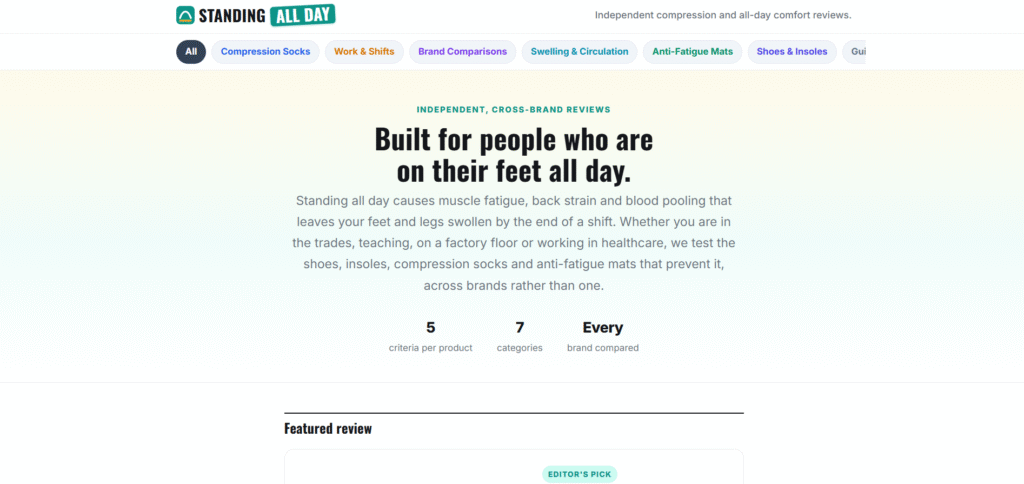
Many jobs require people to spend most of their working hours on their feet. Whether you’re working behind a retail counter, preparing meals in a busy kitchen, helping customers, caring for patients, or working in a warehouse, standing for several hours can become physically demanding.
StandingAllDay.com is a useful focus for people searching for practical ideas related to standing comfort, supportive footwear, workplace habits, and better daily routines. With a few thoughtful changes, workers can make long periods on their feet more manageable.
The Physical Demands of Standing
Standing may appear simple, but the body is constantly working to maintain balance. Your feet support your body while your leg and core muscles help maintain your position.
When this continues for hours, fatigue can gradually develop. Some people notice aching feet, tired legs, heel discomfort, or stiffness in their lower back after a long shift.
The workplace environment can also influence how demanding standing feels. Hard flooring, limited movement, unsuitable shoes, and poorly positioned work equipment can all contribute to discomfort.
Start With the Foundation: Your Feet
Your feet are the foundation of your standing position, so comfortable footwear deserves serious attention.
When choosing shoes for a job that requires standing, look for a proper fit and enough cushioning for your working environment. A shoe shouldn’t squeeze your toes or allow your heel to move excessively.
Different occupations may require different footwear features. For example, someone working in a kitchen may prioritize slip resistance, while someone working in an office reception area may focus more heavily on cushioning and overall comfort.
Replace Worn-Out Footwear
Even a comfortable pair of shoes eventually loses its effectiveness.
Daily use can gradually wear down the sole and reduce cushioning. If your shoes have become noticeably uneven, damaged, or uncomfortable, it may be time to consider replacing them.
Rotating between suitable pairs can also give footwear time to air out and recover between uses, depending on your circumstances.
Think About the Surface You’re Standing On
The floor beneath you matters.
Concrete and other hard surfaces provide little cushioning, which can make long shifts feel more demanding. If your workplace allows it, an anti-fatigue mat can create a more comfortable standing area.
The mat should be large enough for the working position, stable on the floor, and appropriate for the environment.
Movement Is Important
Remaining completely stationary for hours isn’t ideal for comfort. Whenever your responsibilities allow, introduce small amounts of movement into your routine.
Walk around when possible. Change your stance. Move your ankles. Shift your weight between your feet. These simple actions can prevent your workday from becoming one long period of rigid standing.
Even a few seconds of movement repeated throughout the day can help make your position feel less repetitive.
Build a Better Workstation
Workplace organization can have a surprisingly large effect on physical comfort.
Keep commonly used tools and supplies within an easy reach. Adjust the height of counters or work surfaces where possible. Avoid repeatedly bending down or reaching overhead for items you use throughout the day.
A well-designed workstation allows you to complete tasks without constantly putting your body into awkward positions.
Don’t Lock Your Knees
People who stand for long periods sometimes develop the habit of keeping their legs completely rigid. Instead, try to maintain a natural stance and allow your knees to remain relaxed.
Changing your position regularly is generally more comfortable than attempting to hold one exact posture for hours.
Consider Your Entire Body
Standing comfort isn’t only about your feet.
Your ankles, knees, hips, back, shoulders, and neck can all be affected by the way you stand and work. If you consistently lean forward, twist to one side, or reach awkwardly, other parts of your body may become tired.
Think about your complete working position rather than focusing exclusively on your shoes.
Take Advantage of Breaks
When your workplace provides scheduled breaks, use them to change position and give your body an opportunity to rest.
If you can sit for a few minutes, do so. If sitting isn’t practical, walking slowly or changing activities can still provide a useful break from stationary standing.
Breaks are not wasted time. They can help you return to your responsibilities feeling more comfortable and focused.
Stay Hydrated Throughout the Day
Busy workers sometimes forget about hydration. Keeping water accessible can make it easier to drink regularly during your shift.
Your individual hydration needs can vary depending on temperature, activity level, clothing, and other factors. In hot environments or physically demanding workplaces, paying attention to fluid intake becomes especially important.
Develop an After-Work Recovery Routine
A long shift doesn’t necessarily end when you leave the workplace. Giving yourself some time to recover can help you feel better before the next workday.
You might change into comfortable clothing, remove your work shoes, sit down for a while, and perform gentle stretches or movements.
The most important thing is to find a routine that feels comfortable and fits naturally into your lifestyle.
StandingAllDay.com and Everyday Comfort
The central idea behind StandingAllDay.com is relevant to a wide range of workers. People shouldn’t have to guess how to make long standing periods more comfortable.
Practical information about footwear, movement, posture, workplace ergonomics, floor surfaces, and recovery can help people make more informed everyday choices.
There isn’t a single product or technique that works for everyone. Comfort usually comes from combining several sensible habits.
Know When to Seek Professional Advice
Normal fatigue after a long workday is one thing, but ongoing pain is different. If discomfort is persistent, severe, worsening, or interfering with your everyday activities, it may be worth consulting a healthcare professional.
Unusual swelling, numbness, weakness, or sudden significant pain should also receive appropriate medical attention rather than being automatically attributed to standing.
Conclusion
Spending all day on your feet can be challenging, but a thoughtful approach can make the experience easier. Supportive footwear, a suitable work surface, regular movement, good posture, an organized workstation, and adequate recovery can all contribute to greater everyday comfort.
For people looking for practical information about managing long hours on their feet, StandingAllDay.com provides a strong and memorable focus. The key is to understand your working environment, listen to your body, and make small improvements that can become lasting habits.