
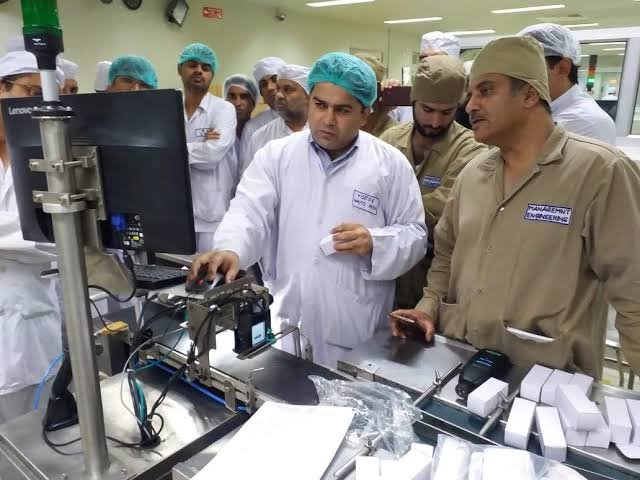
The pharmaceutical industry plays an important role in improving healthcare by developing medicines, studying diseases, and finding new ways to support patient well-being. Behind every successful pharmaceutical product is a long process of research, evaluation, testing, and quality control. Organizations involved in pharmaceutical research help transform scientific ideas into potential treatments and provide valuable information that supports healthcare innovation. In this context, understanding the role of intex pharma research offers useful insight into how research contributes to the broader pharmaceutical landscape.
Understanding Pharmaceutical Research
Pharmaceutical research involves a wide range of scientific activities designed to discover, evaluate, and improve medicines. Researchers may study biological processes, investigate potential drug compounds, examine treatment mechanisms, and evaluate safety considerations. The work can begin with laboratory-based research and continue through increasingly advanced stages of development.
The process requires scientific knowledge, carefully designed methodologies, accurate documentation, and appropriate quality standards. Each stage contributes information that helps researchers determine whether a potential treatment should progress further. Pharmaceutical research is therefore not limited to discovering new substances; it also involves understanding how products may perform, how they can be developed, and what evidence is required to support their use.
The Role of Intex Pharma Research
Intex pharma research represents the broader concept of specialized pharmaceutical research activities that support the development and evaluation of healthcare products. Such research can bring together scientific disciplines, technical expertise, research methodologies, and quality-focused practices.
A research organization operating within the pharmaceutical sector may contribute to different stages of product development. Depending on its area of specialization, this can include laboratory investigations, research planning, data collection, analysis, documentation, and other activities associated with pharmaceutical development.
The value of this work comes from producing reliable information. Pharmaceutical decisions need to be supported by evidence rather than assumptions. Structured research allows scientists and other professionals to examine questions systematically and identify findings that can guide subsequent development.
Supporting Drug Discovery
One of the most important areas of pharmaceutical research is drug discovery. Scientists investigate biological targets and potential compounds to determine whether they may have useful therapeutic properties. This stage can involve extensive laboratory work and analysis.
Researchers may examine how a compound interacts with specific biological systems, investigate its characteristics, and compare results across different experiments. Promising findings can provide a foundation for additional research.
Drug discovery is inherently complex because a compound that appears promising during an early investigation may face significant challenges later. Researchers therefore need to collect detailed information before making decisions about continued development.
Contributing to Product Development
Pharmaceutical research extends beyond discovering potential drug candidates. Once a promising candidate has been identified, additional development work is required to understand its characteristics and determine how it can potentially become a usable pharmaceutical product.
Research may address areas such as formulation, stability, dosage considerations, manufacturing processes, and product performance. Scientists and technical specialists evaluate information generated during development to identify potential issues and opportunities for improvement.
This stage demonstrates why pharmaceutical research requires cooperation between different areas of expertise. Chemistry, biology, pharmacology, analytical science, manufacturing, and quality management can all contribute to the development process.
Importance of Scientific Data
Reliable data is at the heart of pharmaceutical research. Every experiment, observation, measurement, and analysis can contribute to a larger body of evidence. Researchers must therefore pay close attention to how information is generated, recorded, evaluated, and interpreted.
Accurate data can help researchers identify patterns and understand whether observed results are meaningful. It can also support comparisons between different formulations, compounds, or experimental conditions.
Data quality is particularly important because pharmaceutical research can involve complex decisions. Poorly collected or incomplete information may make it difficult to understand a product’s characteristics. Strong research practices help improve confidence in the information used throughout development.
Quality and Research Standards
Quality is another central consideration in pharmaceutical research. Research activities must be organized carefully to ensure that procedures are consistent and results can be evaluated appropriately.
Quality-focused processes can include documented procedures, controlled research environments, equipment management, record keeping, and review practices. Depending on the type of research being conducted, different regulatory and scientific standards may apply.
Maintaining appropriate standards helps researchers create dependable evidence. It also supports transparency by making it easier to understand how research was performed and how conclusions were reached.
The Importance of Experienced Researchers
Pharmaceutical research requires professionals with specialized knowledge. Scientists, laboratory specialists, research associates, data professionals, quality experts, and other technical personnel may contribute to different stages of a project.
Experience can help researchers recognize potential challenges, select appropriate methodologies, and interpret findings within the correct scientific context. Collaboration between specialists is equally important because pharmaceutical development involves multiple interconnected disciplines.
A strong research environment encourages professionals to share information and approach complex scientific questions from different perspectives. This collaborative approach can help create a more complete understanding of a potential pharmaceutical product.
Research and Innovation
Innovation is closely connected with pharmaceutical research. Advances in molecular biology, analytical technologies, computational methods, laboratory equipment, and data analysis continue to influence how researchers investigate medicines.
Modern research can use increasingly sophisticated techniques to study biological processes and pharmaceutical compounds. These technologies may improve the ability to collect detailed information and identify relationships that were previously difficult to investigate.
However, technology works best when combined with sound scientific methodology. New tools must be used appropriately, and their results still require careful validation and interpretation.
Ethical Considerations in Pharmaceutical Research
Ethics is an essential part of responsible pharmaceutical research. Researchers must consider the potential impact of their work on patients, research participants, animals where applicable, healthcare professionals, and society.
Research involving human participants requires appropriate protections, informed consent processes, oversight, and adherence to applicable requirements. Researchers also have responsibilities regarding data integrity, transparency, and accurate reporting.
Ethical research helps ensure that scientific progress does not come at the expense of participant safety or research integrity. These principles are fundamental to maintaining public confidence in pharmaceutical development.
The Broader Impact of Pharmaceutical Research
The impact of pharmaceutical research can extend beyond individual products. Research findings can improve scientific understanding, contribute to knowledge about diseases, and help identify new approaches to treatment.
Successful research can also encourage further investigation. One scientific discovery may lead to additional questions, creating new opportunities for researchers to explore biological mechanisms, treatment approaches, and pharmaceutical technologies.
Organizations associated with intex pharma research therefore operate within a larger ecosystem in which scientific knowledge, technological development, quality practices, and healthcare needs intersect.
Looking Toward the Future
The future of pharmaceutical research is likely to involve continued integration of advanced technology with established scientific practices. Artificial intelligence, automation, high-throughput screening, advanced analytics, and improved laboratory technologies are already influencing research environments.
Researchers may increasingly use computational tools to organize large datasets and identify potential patterns. At the same time, experimental research will remain essential for validating scientific hypotheses and understanding how potential pharmaceutical products behave.
The continued development of research capabilities can contribute to more efficient investigation and a deeper understanding of complex medical challenges.
Conclusion
Pharmaceutical research is a detailed and multidisciplinary process that supports the discovery, development, and evaluation of medicines. From early scientific investigations to product development, data analysis, quality management, and ethical oversight, every stage contributes valuable information.
The role associated with intex pharma research can be understood within this broader framework of scientific investigation and pharmaceutical development. Effective research depends on reliable data, qualified professionals, appropriate methodologies, strong quality practices, and responsible decision-making. As science and technology continue to advance, pharmaceutical research will remain an important part of efforts to understand diseases, investigate potential treatments, and support innovation throughout the healthcare industry.