
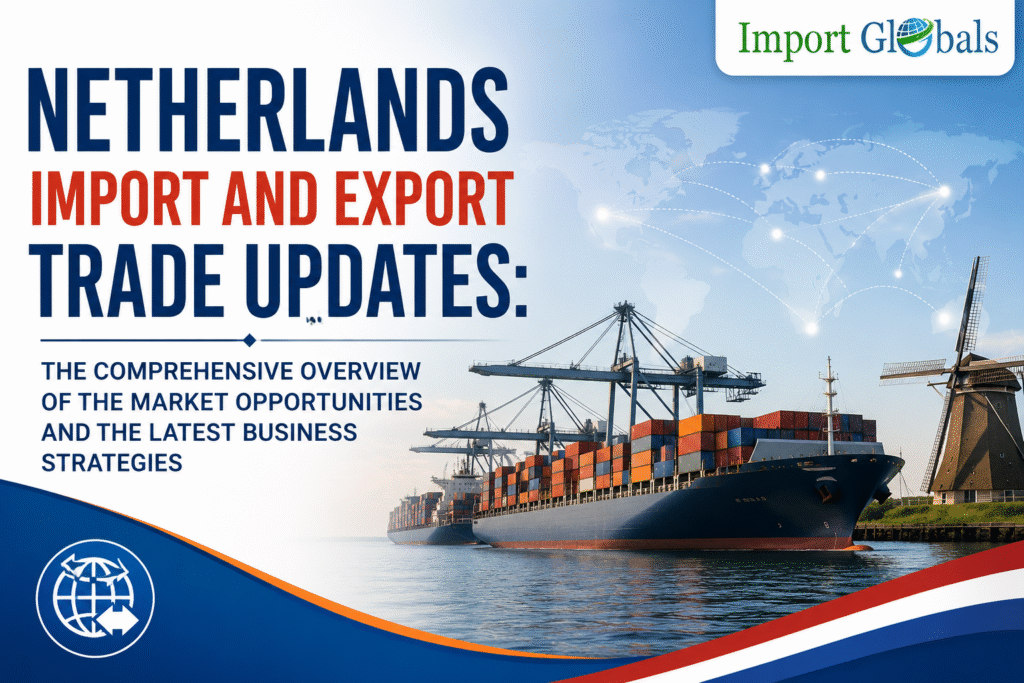
The Netherlands is currently one of the most important trading economies, mainly backed up by the advanced logistics infrastructure, sophisticated manufacturing capabilities, and the strong integration maintained by the country with the international market. The location of the nation at the gateway to Europe has maintained the establishment of the country as a major distribution and re-export hub. The world-class port infrastructure of Rotterdam and the extensive road and rail networks have crafted the overall trade growth of the Netherlands. The Netherlands has maintained extensive trade in machinery, electrical equipment, mineral fuels, and chemicals, with specific supply to transportation equipment-requiring nations.
Netherlands Import Data are valuable trade tools for businesses looking for service expansion. The authorities can get a proper understanding of the purchasing patterns, along with supply relationships, product movements, and market demand rates. Netherlands Trade Data helps companies get proper identification of importers, exporters, distributors, manufacturers, and sourcing markets. Netherlands Export Data allows businesses to get a proper evaluation of destination markets, along with an understanding of export capabilities. The shipment-level trade intelligence on the Netherlands supports targeted sales with supplier identification, competitor monitoring, and international market expansion.
THE SIGNIFICANT ROLE OF THE NETHERLANDS IN GLOBAL TRADE
The Netherlands has properly established its position as one of the strong contributors to global trade. The highly developed logistics ecosystem, strategic European location, and diversified industrial base have promoted bilateral integrity. The country has been acting as one of the top producers and exporters, serving as a major gateway for goods entering the wider European market.
The port of Rotterdam is a significant contributor to the country’s international trade infrastructure. It has facilitated the movement of energy products, chemicals, machinery, and manufactured goods. The connections maintained with Germany, Belgium, France, and other European economies have provided the authority with reliable access to major consumer and industrial markets. The Netherlands Customs Data reports that thecountry is recognized for strong agricultural and food processing industries because of high-technology production, pharmaceuticals, machinery, and energy-related activities.
The sectors contribute to domestic economic activity and international trade. Netherlands shipments data provides the authorities with detailed visibility into international cargo movements. The data set enables businesses to make decisions based on the product description, shipment quantity, origin, and destination markets. The companies can plan their trade expansion with the detailed acknowledgement of Netherlands trade data that supports understanding of the commercial relationship and identification of potential buyers.
THE COMPREHENSIVE OVERVIEW OF NETHERLANDS IMPORTS
Netherlands has been sourcing different globally demanded essentials from foreign suppliers, mainly because of the large consumer market, industrial requirements, energy demand, and manufacturing activities. Machinery and electrical equipment play an important role, backed up by manufacturing support technology, logistics, and industrial operations.
Netherlands import data enables businesses to examine purchasing patterns across product categories. International suppliers can refer to the information given to understand the demand rate, with the evaluation of importing companies and identification of potential business relationships. Mineral fuels and energy-related products traders can view the latest components traded with the Dutch import market. The energy infrastructure and extensive logistic network support the movement, processing, storage, and redistribution of energy commodities.
Businesses can use the trade insights of energy, petroleum products, natural gas, and related industrial materials for examination of the Netherlands customs data for acknowledgement of the sourcing patterns. Electrical and electronic equipment are also significant contributors towards the country’s overall trade growth. Chemicals, pharmaceuticals, plastics, metals, and industrial materials are contributing to the import portfolio. The Netherlands shipment data overall allows businesses to examine the movement with proper study of shipment frequencies, supplier countries, importing countries, and product descriptions.
THE EXPORT MARKET OVERVIEW OF THE NETHERLANDS
The Netherlands Export Data is a proper representation of the total valuation and variations of goods exported from the nation. The highly connected European market and the sophisticated industrial ecosystem have maintained the overall growth rate. The export portfolio mainly includes machinery, electrical equipment, chemicals, pharmaceuticals, agricultural products, and food preparation. Machinery and electrical equipment are among the top contributors to the export categories. Dutch companies’ effective supply of industrial machinery, specialized equipment, and electrical systems has maintained customers’ access to European and international markets.
The agricultural and food sector is also a massive contributor to the Netherlands export data. The development of the highly efficient agricultural ecosystem is supported by advanced farming technologies, food processing, cold chain infrastructure, and international distribution. Chemicals and pharmaceuticals play an important role in the Dutch export economy. The presence of the nation in specialized manufacturing facilities and a strong European supply chain has supported the international demand rate. The Netherlands is also functioning as an important re-export centre. Products imported from Asia, North America, and other regions are slightly moving through the export centres to facilitate the overall growth rate.
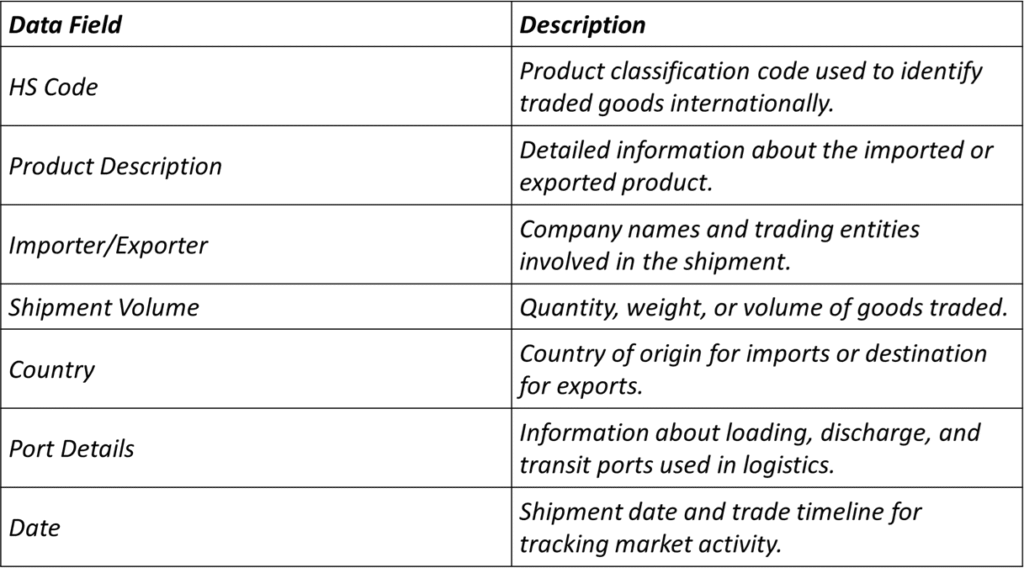
WHAT DETAILS ARE INCLUDED IN NETHERLANDS CUSTOMS DATA?
THE EFFECTIVENESS OF NETHERLANDS IMPORT DATA AND NETHERLANDS CUSTOMS DATA IN BUSINESS GROWTH
Netherlands import data and Netherlands customs data are valuable tools for business authorities looking for service expansion. The historical shipment information enables companies to get a proper overview of the importers, along with purchasing behaviour, evaluation of supplier countries, and examination of recurrent product demand. The businesses can identify the Dutch companies for regular purchase of particular products and development of the targeted sales.
The approach of the entire market exporters is mainly focused on the businesses that are actually demonstrating purchasing activities. Competitors trying to be progressive can get analysis of the important applications of the latest traders. The companies can examine the competitor shipment activity with an understanding of the sourcing countries and supply relationship. This information helps the businesses identify opportunities for product differentiation.
HOW DOES NETHERLANDS IMPORT EXPORT DATA SUPPORT BUSINESS GROWTH?
- Identification of verified buyers and suppliers: Netherlands import export data helps businesses get a proper evaluation of the buyers and suppliers. The acknowledgement of the product description, HS code, shipment information, and company details supports marketing strategies.
- Competitor shipment monitoring: Businesses can get competitor acknowledgement of activities with an understanding of the sourcing strategies. The latest intelligence helps the companies strengthen their competitive positioning.
- Market demand analysis: The historical Netherlands trade data gives reliable access to the businesses for examination of product demand, shipment frequency, and purchasing patterns. The increasing shipment activity indicates the growing commercial interest towards specific product categories.
- Supply chain optimization: Netherlands customs data helps businesses evaluate the sourcing countries with supply relationships. Businesses can compare alternative suppliers to improve procurement strategies.
- Identification of emerging opportunities: Netherlands shipment data reveals the changing product activity. The businesses can monitor the developments of the latest trends for identification of new commercial opportunities.
THE FUTURE TRADE OUTLOOK OF NETHERLANDS IMPORT-EXPORT DATA
Netherlands import-export data will be mainly backed up by technological development, European supply chain diversification, energy transition, and logistic modernization. Machinery, electrical equipment, chemicals, pharmaceuticals, food, and other agricultural commodities will be the main traded sectors. The increasing adoption of automation, digital logistics, artificial intelligence, and advanced manufacturing technologies will create additional opportunities for international suppliers.
The Netherlands will be an important contributor to the European distribution hub because of its location and logistics capabilities. Sustainability and the energy transition will influence the future trade activity of the Netherlands. The renewable energy technologies and the energy-efficient equipment will create new commercial opportunities for the latest trades.
CONCLUSION
The Netherlands customs shipment data show that the country is an important global trading economy because of geographical positioning, advanced logistic infrastructure, and diversified industrial capabilities. The role of the nation as a major European gateway is strengthened due to the important export activities across machinery, electrical equipment, chemicals, pharmaceuticals, agricultural products, food, and energy products. Netherlands import data gives valuable information to companies for identification of active buyers and sourcing patterns.
Netherlands customs data can provide examination-based data sheets along with shipment-level information to help the latest traders evaluate market strategies. The European supply chains are continuously evolving, due to which the Netherlands is also maintaining its position as an important centre for international commerce. Businesses can use the trade intelligence for gaining better visibility into market sourcing and movements.
CTA
Trying to expand your business opportunities in the Netherlands? You have landed at the right platform here. Import Globals provides detailed trade intelligence to business authorities to help businesses identify buyers, suppliers, shipping activities, sourcing patterns, and market opportunities. Subscribe to www.importglobals.com or drop an email at info@importglobals.com for detailed access to the Netherlands trade information in order to strengthen your international business growth.
FAQs
Que –What are the major imported products of the Netherlands?
Ans –Machinery, electrical and electronic equipment, and mineral fuels are the major imports.
Que –What are the top exported products of the Netherlands?
Ans –Machinery, electrical equipment, and chemicals are the top exported products of the Netherlands.
Que –How does Netherlands import-export data support business growth?
Ans -Netherlands import-export data support business growth via proper identification of buyers, supplier analysis of market demand, and development of effective market expansion strategies.
Que –What information is available in Netherlands trade data?
Ans -Netherlands trade data covers Importer names, Exporter names, Shipment date, HS Code, Product Details, quantity, values, pricing information, origin country, importing country & port details.
Que –How frequently is Netherlands trade data updated?
Ans -Netherlands trade data is updated on a monthly basis.
Que –Where can you obtain detailed information on Netherlands trade data?
Ans –Visit www.importglobals.com or drop an email at info@importglobals.com for detailed updates on Netherlands trade data.