
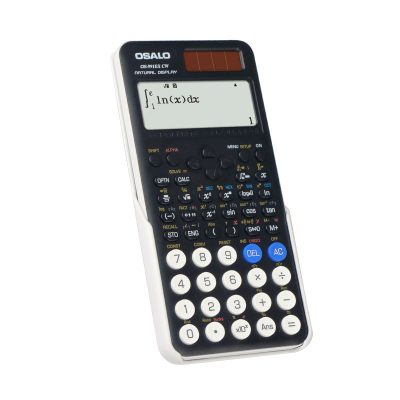
Mathematics can become challenging when students and professionals deal with advanced integration problems. Solving lengthy equations manually often takes time and increases the chances of mistakes. This is why many learners now rely on an integral calculator to simplify difficult calculations and improve accuracy. Whether you are studying calculus, engineering, physics, or statistics, modern tools make integration easier and faster than ever before.
An integral calculator is designed to solve mathematical integrals instantly. It can handle basic indefinite integrals as well as complicated definite integrals involving trigonometric, logarithmic, exponential, and polynomial functions. Instead of spending hours solving equations by hand, users can receive accurate answers within seconds. This saves time while also helping learners understand the steps involved in solving integration problems.
Understanding the Role of Integration in Mathematics
Integration is one of the core concepts in calculus. It is used to determine areas under curves, calculate accumulated quantities, and solve real-world problems involving motion, growth, and change. Students often struggle with integration because it involves multiple rules and techniques. Methods such as substitution, integration by parts, and partial fractions can become confusing when equations are lengthy.
This is where an integral calculator becomes extremely valuable. It provides step-by-step solutions that guide users through the process. Instead of memorizing every formula without understanding it, learners can analyze the solution and improve their knowledge over time.
Complex integration problems are common in academic studies and professional applications. Engineers use integration to calculate structural loads and fluid dynamics. Economists apply calculus to determine growth trends and optimization problems. Scientists rely on integration in physics and chemistry for accurate measurements and predictions. An integral calculator supports all these fields by delivering fast and precise results.
Why Students Prefer an integral calculator
Students often face tight deadlines and multiple assignments. Solving advanced calculus problems manually may consume hours of study time. An integral calculator reduces this burden by offering quick solutions and detailed explanations.
One major advantage is accuracy. Manual calculations can easily include algebraic errors that affect the final answer. With an integral calculator, users can verify their work instantly and identify mistakes before submitting assignments or preparing for exams.
Another reason students prefer digital tools is convenience. Most calculators are available online and accessible from smartphones, tablets, or laptops. This allows students to solve equations anytime and anywhere. Whether studying at home or preparing in a classroom, an integral calculator offers immediate assistance.
Step-by-step explanations are another important feature. Instead of simply displaying the final answer, advanced calculators show each stage of the solution. This helps learners understand how integration techniques are applied. Over time, students gain confidence and improve their problem-solving skills.
Solving Definite and Indefinite Integrals Efficiently
Definite and indefinite integrals require different approaches. An indefinite integral focuses on finding the antiderivative of a function, while a definite integral calculates the numerical value over a specific interval.
An integral calculator can solve both types efficiently. For indefinite integrals, the calculator identifies the correct formula and simplifies the equation step by step. For definite integrals, it evaluates the function within the given limits and provides an exact or approximate value.
For example, solving trigonometric integrals manually often requires multiple transformations and identities. An integral calculator can complete these calculations within seconds. Similarly, exponential and logarithmic integrals become easier when automated tools are used.
Students who regularly practice with a calculator also improve their understanding of calculus concepts. By comparing manual work with automated solutions, they can learn where mistakes occur and how to apply formulas correctly.
Features of a Modern integral calculator
Modern calculators are far more advanced than simple equation solvers. They include intelligent features that support learning and productivity.
Step-by-Step Solutions
Detailed breakdowns help users understand the integration process. Every transformation and simplification is displayed clearly.
Graphical Representation
Some tools generate graphs to visualize functions and areas under curves. This improves conceptual understanding and helps users interpret results more effectively.
Multiple Integration Techniques
An integral calculator can apply substitution, integration by parts, trigonometric identities, partial fractions, and advanced calculus methods automatically.
Instant Results
Fast computation saves valuable time during homework, exams, and research projects.
User-Friendly Interface
Most platforms are designed for beginners and advanced learners alike. Users can enter equations easily and receive organized solutions immediately.
These features make an integral calculator an essential educational resource for students and professionals.
Benefits for Teachers and Educators
Teachers also benefit from using digital calculus tools in classrooms. An integral calculator can help instructors demonstrate solutions quickly and explain complex topics more clearly.
Instead of spending excessive time writing lengthy calculations on a board, educators can focus on conceptual understanding. They can use calculator-generated steps to discuss methods and encourage critical thinking among students.
Additionally, teachers can create practice exercises and verify answers efficiently. This improves lesson planning and reduces grading time. Educational institutions increasingly integrate technology into mathematics learning because it enhances student engagement and comprehension.
Applications Beyond the Classroom
The usefulness of an integral calculator extends far beyond academic environments. Professionals in various industries rely on integration for problem-solving and analysis.
Engineering
Engineers use calculus to design structures, analyze electrical systems, and calculate mechanical forces. An integral calculator helps simplify these advanced computations.
Physics
Integration is essential in physics for determining velocity, acceleration, work, and energy. Quick solutions improve efficiency during research and experimentation.
Economics
Economists use integration to model financial growth, consumer behavior, and optimization problems. Automated tools support accurate analysis.
Data Science
In statistics and probability, integration plays a role in distributions and predictive models. A reliable integral calculator assists with complex calculations in data analysis.
These applications demonstrate how digital tools contribute to faster and more accurate work across multiple disciplines.
Improving Learning Through Practice
While an integral calculator is extremely useful, students should avoid becoming overly dependent on technology. The best approach is to combine calculator assistance with manual practice.
Learners can first attempt a problem independently and then use the calculator to verify their solution. This method strengthens understanding and builds confidence. Reviewing step-by-step explanations also helps students identify weak areas and improve their skills gradually.
Practice remains the key to mastering calculus. However, modern technology makes the learning process smoother and less frustrating. Instead of feeling overwhelmed by complicated equations, students can focus on understanding concepts and applying them correctly.
Choosing the Right integral calculator
Not all calculators provide the same quality of results. Users should select tools that offer detailed explanations, accurate solutions, and support for advanced functions.
A good integral calculator should have a clean interface, fast processing speed, and compatibility with different mathematical expressions. Some platforms also include additional features such as derivative calculations, graphing tools, and equation simplification.
Students and professionals should compare different options before choosing the most suitable calculator for their needs. Reliable tools can significantly improve productivity and learning outcomes.
The Future of Digital Math Tools
Technology continues to transform education and problem-solving. Artificial intelligence and machine learning are making mathematical tools even smarter and more interactive.
Future versions of the integral calculator may include voice input, personalized tutoring, and adaptive learning systems. These innovations will make calculus even more accessible to students worldwide.
As online learning grows, digital calculators will remain an important part of education. They help bridge the gap between theory and application while reducing the stress associated with difficult mathematical problems.
Conclusion
An integral calculator has become an essential tool for solving complex integration problems quickly and accurately. It supports students, teachers, engineers, scientists, and professionals by simplifying advanced calculations and providing detailed explanations.
From improving academic performance to increasing workplace efficiency, the benefits of using an integral calculator are undeniable. It saves time, reduces errors, and enhances understanding of calculus concepts. While manual practice is still important, combining traditional learning methods with modern technology creates a more effective and engaging educational experience.
As mathematics continues to evolve alongside technology, the integral calculator will remain a valuable resource for anyone dealing with calculus and advanced problem-solving.