



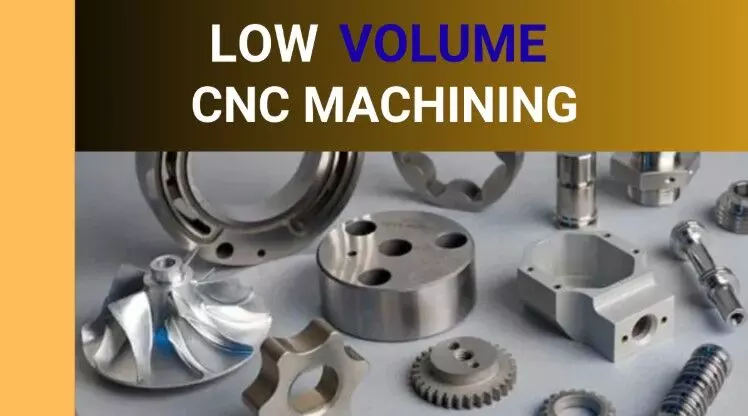
Choosing the right manufacturing method can make or break your product’s success. Whether you are developing a new prototype, launching a startup product, or scaling an established design, the decision between low volume cnc machining and mass production has a significant impact on cost, quality, flexibility, and time to market.
Both approaches offer unique advantages and limitations. Understanding how they compare will help you select the best option based on your project goals, budget, and production timeline.
Understanding Low Volume CNC Machining
Low volume cnc machining refers to the production of small to medium quantities of parts using Computer Numerical Control (CNC) machines. Typically, this ranges from a single prototype to a few thousand units.
CNC machining uses computer-controlled equipment to precisely cut, drill, and shape materials such as aluminum, steel, brass, plastics, and composites. The process is highly automated and extremely accurate, making it ideal for custom components and functional prototypes.
This method is widely used in industries such as aerospace, medical devices, automotive, electronics, and robotics, where precision and quality are critical.
Key Benefits of Low Volume CNC Machining
Faster Time to Market
With low volume cnc machining, you can move from design to production quickly. There is no need to create expensive molds or tooling, which significantly reduces setup time. This makes it ideal for startups and companies launching new products.
Lower Upfront Investment
Unlike mass production methods such as injection molding or die casting, CNC machining requires minimal tooling costs. You pay primarily for machine time and materials, making it a cost-effective option for smaller production runs.
Design Flexibility
Design changes are easy to implement. If you need to modify a part after initial production, you can simply update the CAD file and rerun the program. This flexibility is invaluable during product development and testing phases.
High Precision and Quality
CNC machines deliver tight tolerances and consistent quality. For parts that require intricate geometries or high structural integrity, low volume cnc machining ensures reliability and repeatability.
Understanding Mass Production
Mass production refers to manufacturing large quantities of identical products using automated assembly lines and specialized tooling. This method is commonly used in consumer goods, automotive manufacturing, electronics, and household appliances.
Mass production typically involves processes such as injection molding, stamping, casting, and high-speed assembly systems. These processes are optimized for efficiency and scale.
Key Benefits of Mass Production
Lower Cost Per Unit at Scale
Once tooling and setup costs are covered, the cost per unit drops significantly. For high-volume orders—often tens of thousands or millions of units—mass production is far more economical.
High Efficiency
Mass production systems are designed for continuous operation. This allows manufacturers to produce large quantities quickly and consistently.
Consistency in Large Batches
Automation ensures uniformity across massive production runs. This is particularly important for consumer products that require identical performance and appearance.
Cost Comparison: Upfront vs Long-Term Investment
One of the biggest differences between low volume cnc machining and mass production lies in cost structure.
Low volume cnc machining has lower upfront costs because there is no need for custom molds or dies. However, the cost per unit remains relatively stable regardless of quantity. This makes it ideal for small runs but less economical for extremely high volumes.
Mass production, on the other hand, requires substantial upfront investment in tooling, molds, and specialized equipment. But once production ramps up, the cost per unit drops dramatically. This makes it the preferred choice for large-scale manufacturing.
If you’re testing a product concept or producing limited batches, low volume cnc machining is often the smarter financial decision. If you’re manufacturing at scale with stable demand, mass production may provide better long-term savings.
Flexibility and Customization
Flexibility is another critical factor in choosing between the two methods.
Low volume cnc machining allows for easy customization. You can produce different variations of a part without investing in new tooling. This is especially useful for industries requiring tailored solutions, such as medical implants or specialized industrial components.
Mass production offers limited flexibility. Once molds or tooling are created, design changes can be expensive and time-consuming. Any modifications may require retooling, which increases costs and delays production.
If your project requires frequent updates or customization, low volume cnc machining provides a clear advantage.
Lead Time and Speed
When speed is essential, the production method matters.
Low volume cnc machining typically offers shorter lead times because it eliminates the tooling phase. Parts can often be produced within days, depending on complexity and quantity.
Mass production involves longer preparation time due to tooling design, mold fabrication, and assembly line setup. However, once production begins, output speed is significantly higher than CNC machining.
For rapid prototyping and early-stage production, low volume cnc machining is generally faster. For ongoing large-scale distribution, mass production ensures steady supply.
Quality and Precision
CNC machining is known for its precision. Advanced CNC machines can achieve tight tolerances and complex geometries that are difficult to replicate with some mass production techniques.
Industries such as aerospace and medical manufacturing often rely on CNC machining for critical components due to its reliability and accuracy.
Mass production also delivers consistent results, especially when processes are carefully controlled. However, certain methods like injection molding may have slight material variations or limitations in achieving ultra-tight tolerances.
If your project demands high precision and structural strength, low volume cnc machining may offer superior performance.
Risk Management and Market Testing
For new products, minimizing risk is essential.
Low volume cnc machining allows companies to test the market with smaller batches before committing to large-scale manufacturing. This reduces financial risk and prevents overproduction if demand is uncertain.
Mass production requires confidence in demand forecasting. Once tooling investments are made, companies must produce large quantities to justify costs.
Startups and innovators often choose low volume cnc machining during the early stages, then transition to mass production once market validation is achieved.
When to Choose Low Volume CNC Machining
Low volume cnc machining is ideal when:
- You are developing prototypes or pilot runs
- You need fast turnaround times
- You require design flexibility
- Your product involves complex geometries
- Demand is uncertain or limited
- You want to minimize upfront investment
It is especially beneficial for custom machinery, specialized components, and niche markets.
When to Choose Mass Production
Mass production is best when:
- You have confirmed high-volume demand
- The product design is finalized and stable
- You need the lowest possible cost per unit
- You are supplying large retail or distribution networks
- Production efficiency at scale is a priority
This approach is common for consumer electronics, automotive parts, and packaged goods.
Hybrid Manufacturing Approach
In many cases, companies combine both methods. They may start with low volume cnc machining to refine designs and test the market. Once demand increases, they transition to mass production to lower costs and increase output.
This hybrid approach reduces risk while maximizing profitability over time.
Final Thoughts
There is no universal answer to whether low volume cnc machining or mass production is better. The right choice depends on your project’s stage, budget, design stability, and market demand.
If flexibility, speed, and precision are your top priorities, low volume cnc machining offers significant advantages. If your goal is to produce large quantities at the lowest possible cost per unit, mass production may be the better path.
Carefully evaluate your product lifecycle, financial resources, and long-term strategy before making a decision. By aligning your manufacturing method with your business goals, you can ensure efficiency, profitability, and sustainable growth.