



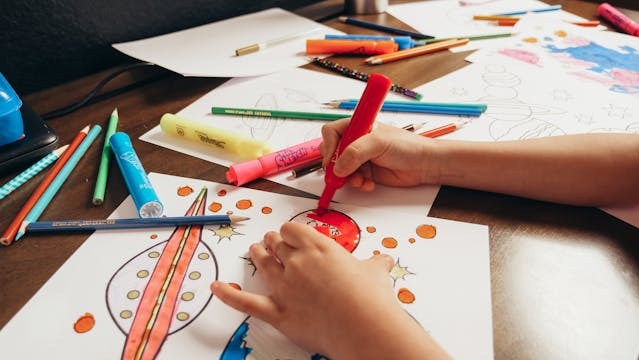
Did you know drawing helps kids learn to talk and read? It is true! Drawing and language are connected in amazing ways. Let us explore how art helps children communicate.
Drawing Comes Before Writing
Before children can write words, they draw. Their scribbles and pictures are early communication. Drawing is a child’s first written language.
When toddlers draw, they are practicing. They learn to hold a pencil. They make marks that mean something. This prepares them for writing letters and words later.
Pictures Tell Stories
Kids often draw to share stories. They create pictures of their day, their family, or their dreams. Each drawing has meaning.
When children explain their drawings, they use words. They describe what they made. They tell you about the people and places in their pictures. This builds speaking skills.
Learning New Words
Drawing introduces children to new vocabulary. They learn words like circle, square, line, and curve. They learn color names and art words.
When kids draw animals, they might learn words like trunk, whiskers, or stripes. Every drawing topic brings new words to learn and use.
Expressing Feelings
Sometimes feelings are hard to put into words. Drawing helps kids show how they feel. A child might draw a sad face or an angry storm.
After drawing, kids can talk about their feelings. The picture helps them find the words. This builds emotional vocabulary and communication skills.
Making Connections
Drawing helps kids connect images and words. When a child draws a dog and says “dog,” they link the picture and the word. This is how reading begins.
Understanding that pictures and words go together is huge. It is the basis for all reading. Drawing makes this connection strong.
Sequencing and Storytelling
Kids can draw stories in order. First this happened, then that happened. This is called sequencing.
Sequencing is important for speaking and writing. Stories need a beginning, middle, and end. Drawing helps kids practice putting ideas in order.
Following Directions
Art activities often have directions. Draw a circle first. Then add two eyes. Put a smile at the bottom.
Following directions is a language skill. Kids must listen and understand. Then they do what the words say. This builds comprehension.
Conversations About Art
Talking about drawings builds language. Ask your child:
- What did you draw?
- Why did you choose those colors?
- What is happening in your picture?
- How did you make this part?
These questions get kids talking. They practice explaining their thoughts clearly.
Reading and Drawing Together
After reading a book, ask your child to draw a scene. This connects reading and art. Kids show they understood the story.
They might also add words or labels to their drawings. This is early writing practice. Reading, drawing, and writing all work together.
Give Kids Time to Draw
Every drawing session helps language grow. It is a fun way to build important skills. So let your child draw often.
Their pictures are more than art. They are stepping stones to reading, writing, and speaking well!